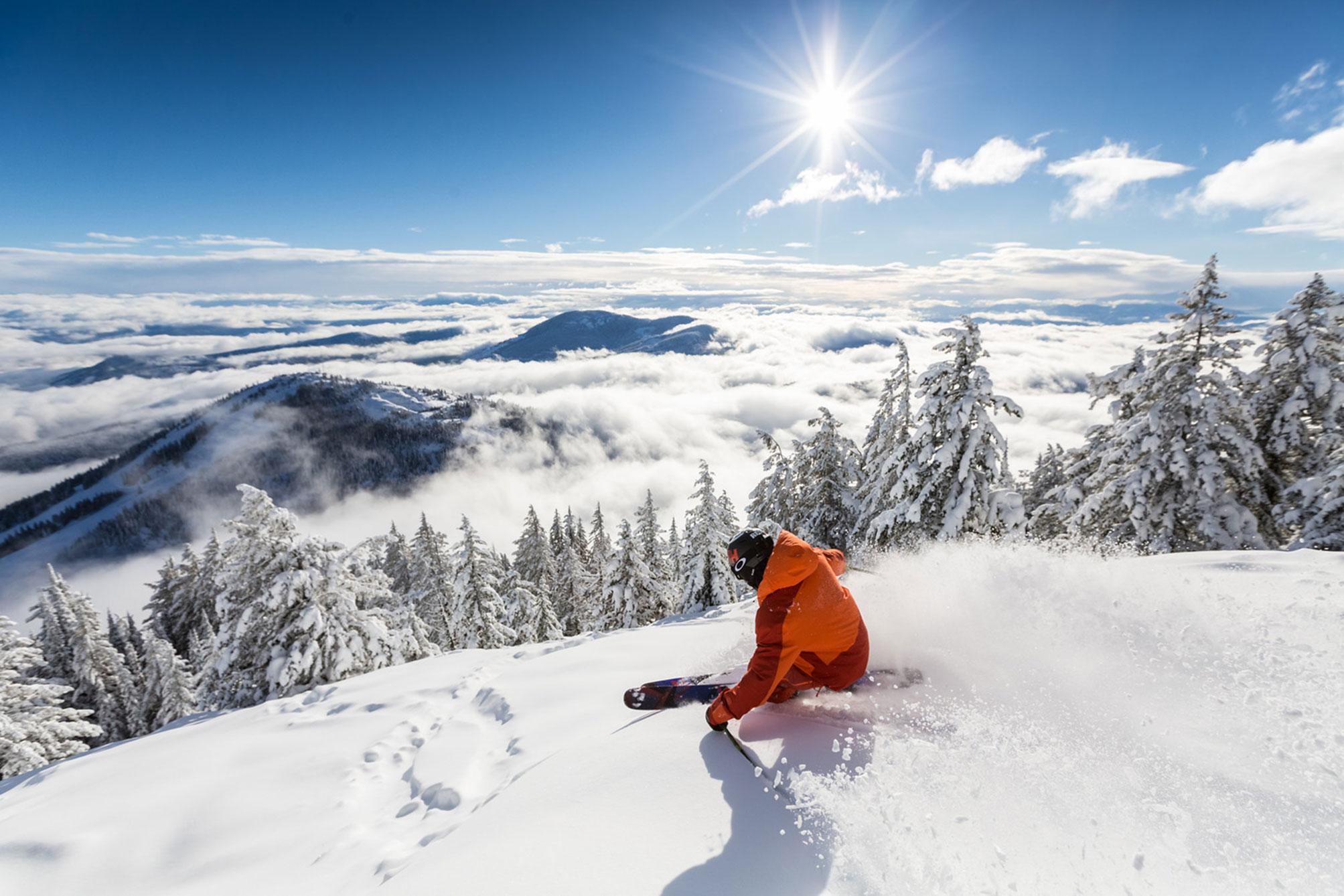
There are plenty of ways to stay active.
You can ride your bike, go for a run, lift weights, hike, ski, walk, paddle, play a sport, or simply find more opportunities to move throughout your day.
And the good news is that movement is good for us.
In a community like Rossland and Trail, that’s easy to appreciate. Skiing, mountain biking, hiking, running, physically demanding work, and everyday activities all keep people moving.
But there’s another part of the conversation that can sometimes get overlooked: variety.
There isn’t one perfect type of exercise
Cardiovascular exercise is important. Strength training is important. Walking, balance, coordination, and mobility are important too.
Current physical-activity guidelines recommend a combination of aerobic activity and muscle strengthening, while also encouraging varied activity that incorporates balance and functional movement as we get older.
It’s less about finding the “perfect” exercise and more about giving your body different kinds of useful input.
Your body adapts to what you ask of it
A cyclist becomes more efficient on a bike. A runner becomes better at running. Someone who strength trains becomes stronger.
That’s exactly what we want from training.
But different activities also challenge the body in different ways — through different positions, loads, speeds, directions, and movement patterns.
For general health and longevity, that variety can be valuable.
You don’t have to become an expert at everything. It can simply mean giving your body opportunities to move in ways that aren’t part of your usual routine.
Don’t forget the joints
We often talk about muscles when we talk about exercise, but joints are what allow the body to move.
Your hips need to rotate. Your knees need to bend and straighten. Your shoulders need to reach and rotate. Your neck needs enough movement to comfortably look around when you’re driving, riding, skiing, or going about your day.
Range of motion isn’t simply about how “tight” a muscle is. It can be influenced by the joint itself, the surrounding muscles and connective tissues, the nervous system, previous injuries, and pain.
That makes joint mobility an important part of the bigger movement picture.
Keeping joints moving matters
Arthritis and other joint conditions become increasingly common as we age, but getting older doesn’t mean we should stop using our joints.
In fact, exercise is one of the most strongly supported approaches for managing osteoarthritis, particularly in the hips and knees.
The goal isn’t to prevent every change that happens with age. It’s to maintain as much movement, strength, and function as possible along the way.
Keeping a joint moving appropriately is one piece of that bigger picture.
Where Chiropractic care fits
One of the things we assess in Chiropractic care is how the joints of the body are moving.
That can include the spine, but also the hips, knees, shoulders, neck, and the joints around the pelvis.
For example, hip mobility can influence how someone walks, squats, cycles, or skis. Neck rotation matters when you’re checking your blind spot. Shoulder mobility matters when you’re reaching, lifting, paddling, or riding.
Where appropriate, Chiropractic care may use adjustment or mobilization to help address areas that aren’t moving as well as expected.
But the important part is what happens next.
Exercise does the long-term work
Chiropractic care and exercise therapy don’t need to compete with one another.
They can complement each other.
An assessment may identify an area where movement is limited, and appropriate Chiropractic care may help improve that joint’s motion. Exercise then helps you build strength, control, endurance, and confidence around that movement.
That’s where the long-term benefit comes from.
The goal isn’t to replace exercise. It’s to help you keep moving.
Why this matters in Rossland and Trail
We have a pretty good natural environment for movement here.
Winter might mean skiing and snowboarding. Summer brings mountain biking, hiking, running, and paddling. Then there are the everyday demands of work, gardening, lifting, carrying, and keeping up with family.
Each activity challenges the body differently.
And that’s a good thing.
If cycling is your favourite activity, keep cycling. If running makes you happy, keep running. If lifting weights keeps you motivated, keep lifting.
You can simply give your body a little variety around the activities you already enjoy.
The takeaway
You don’t need the perfect training program, and you certainly don’t need to do everything.
Keep riding. Keep skiing. Keep hiking. Keep lifting. Keep walking.
And occasionally give your body an opportunity to move in a different way.
Strength, cardiovascular fitness, balance, coordination, and joint mobility all contribute to our ability to stay active as we age.
There isn’t one magic exercise.
The bigger goal is to keep your body capable of doing the things you enjoy.